
1. Botanical Profile & Appearance
-
Scientific Name: Papaver somniferum ‘Ms Harlekyn’
-
Family: Papaveraceae (Poppy family)
-
Life Cycle: Annual (grows, flowers, and sets seed within a single season).
-
Height: Typically reaches 80 to 100 cm (approx. 31 to 39 inches).
The Flower (A Bicolor Visual)
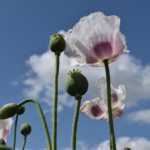
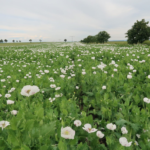
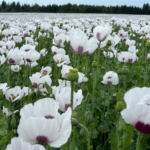
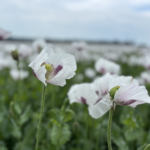
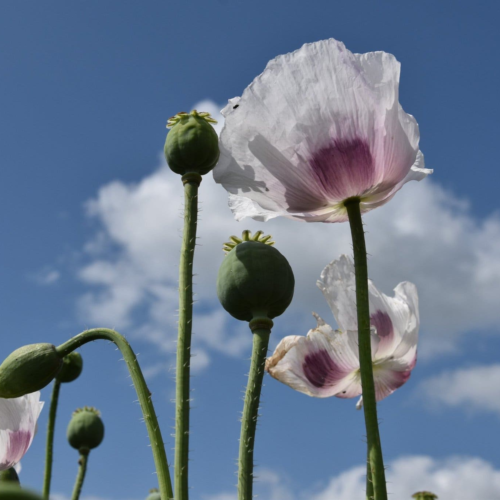
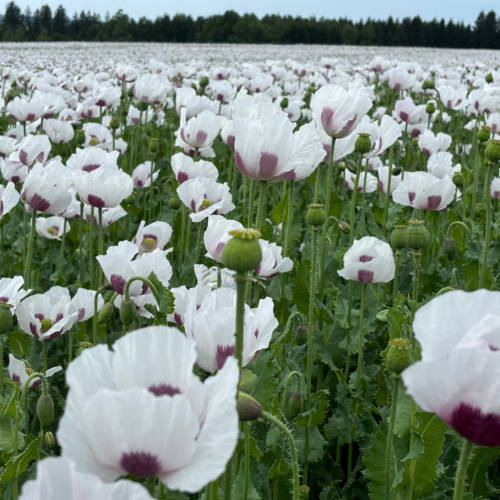
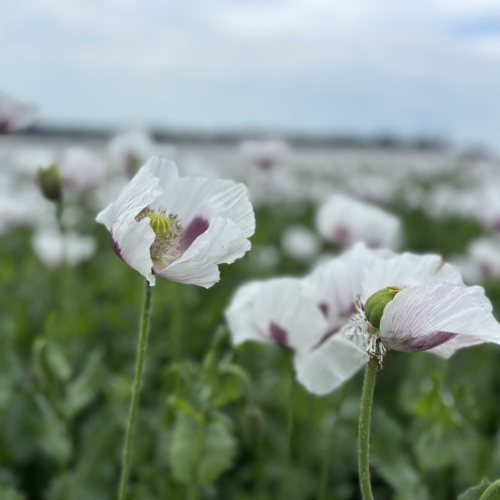
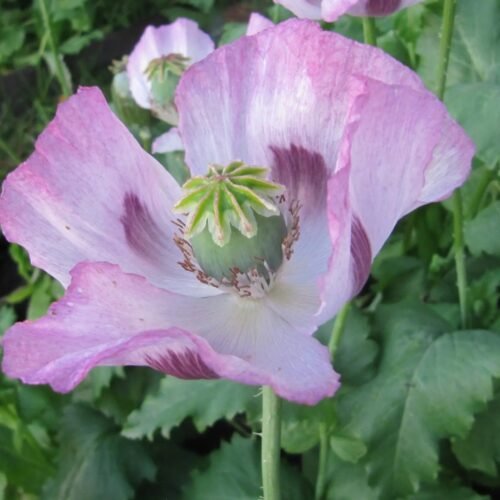
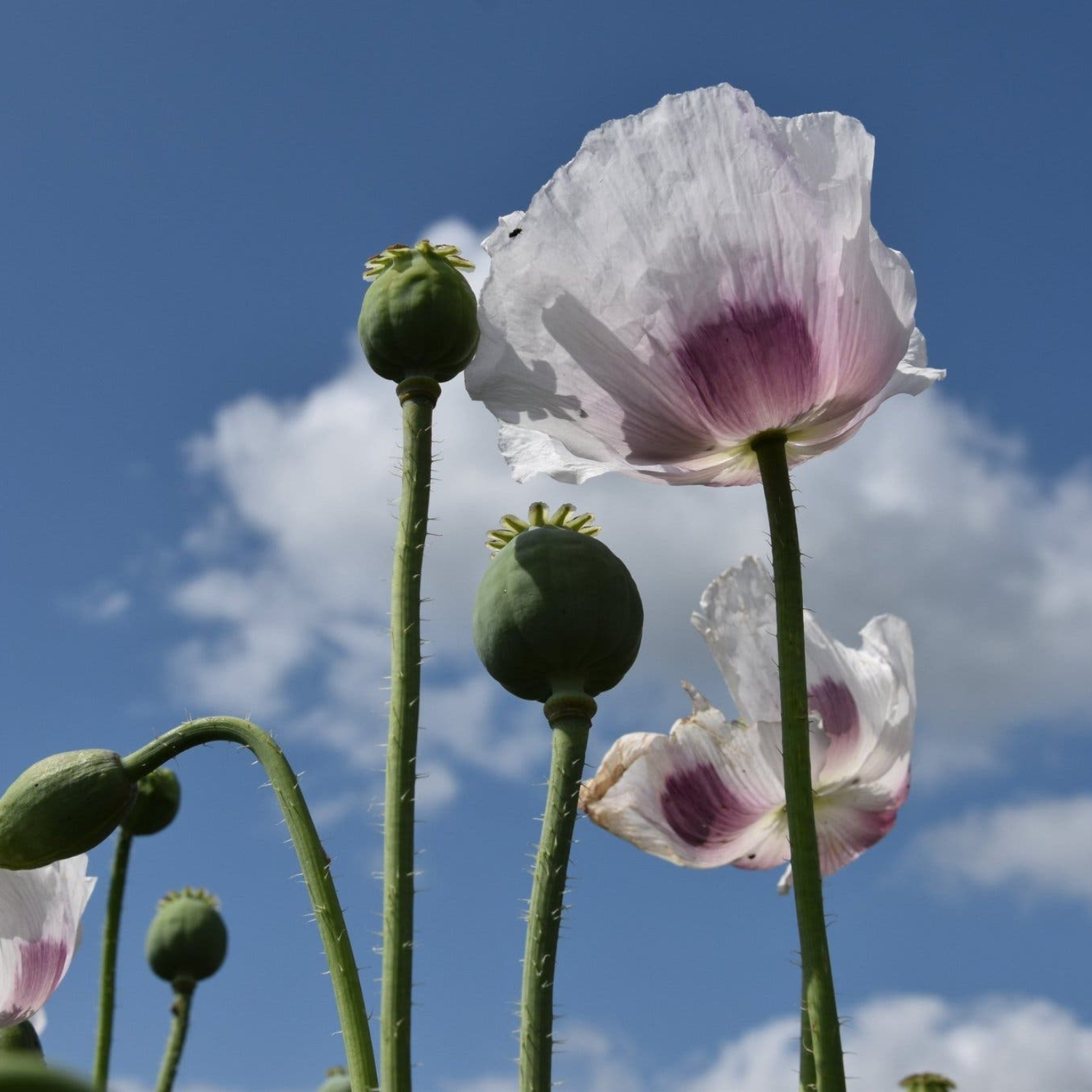
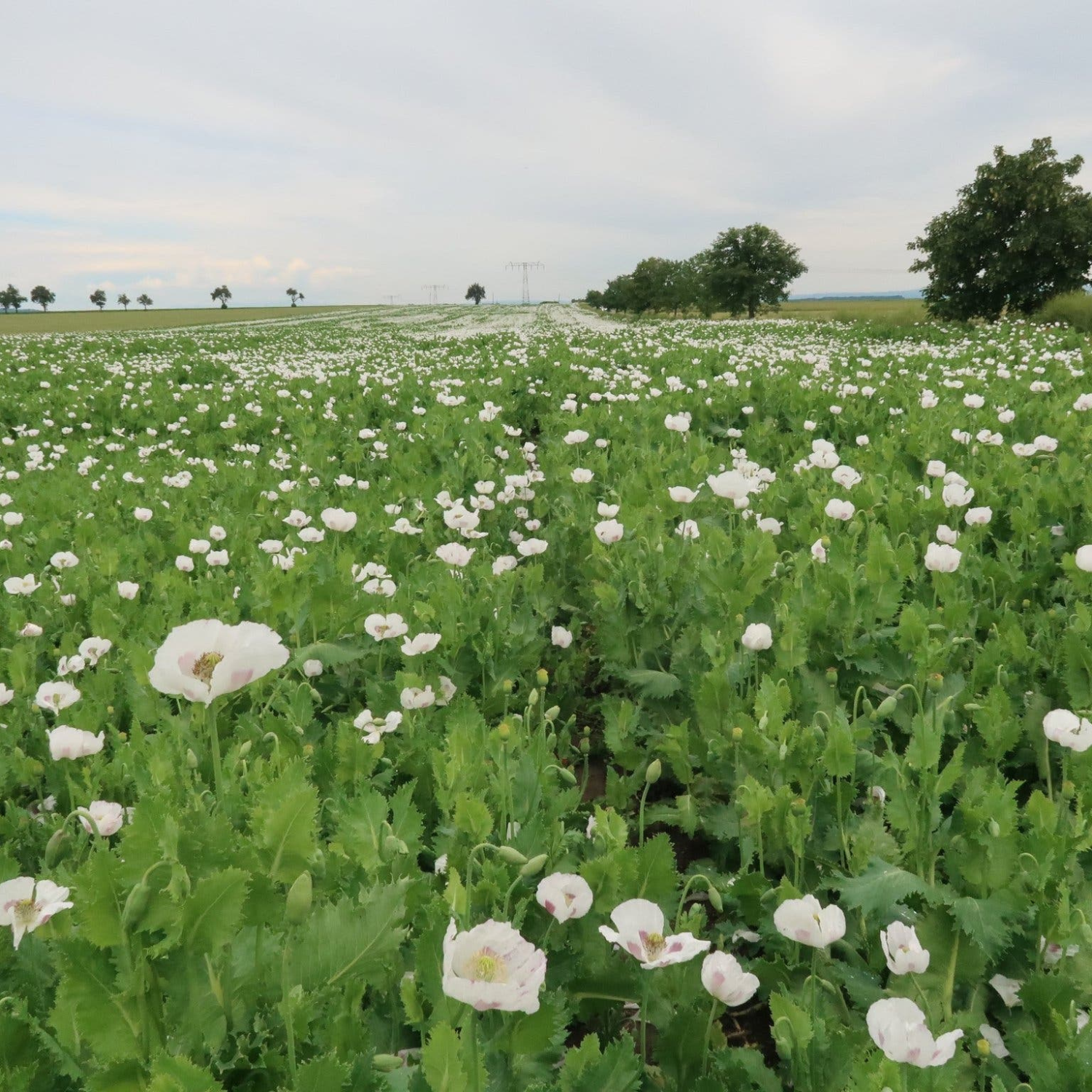
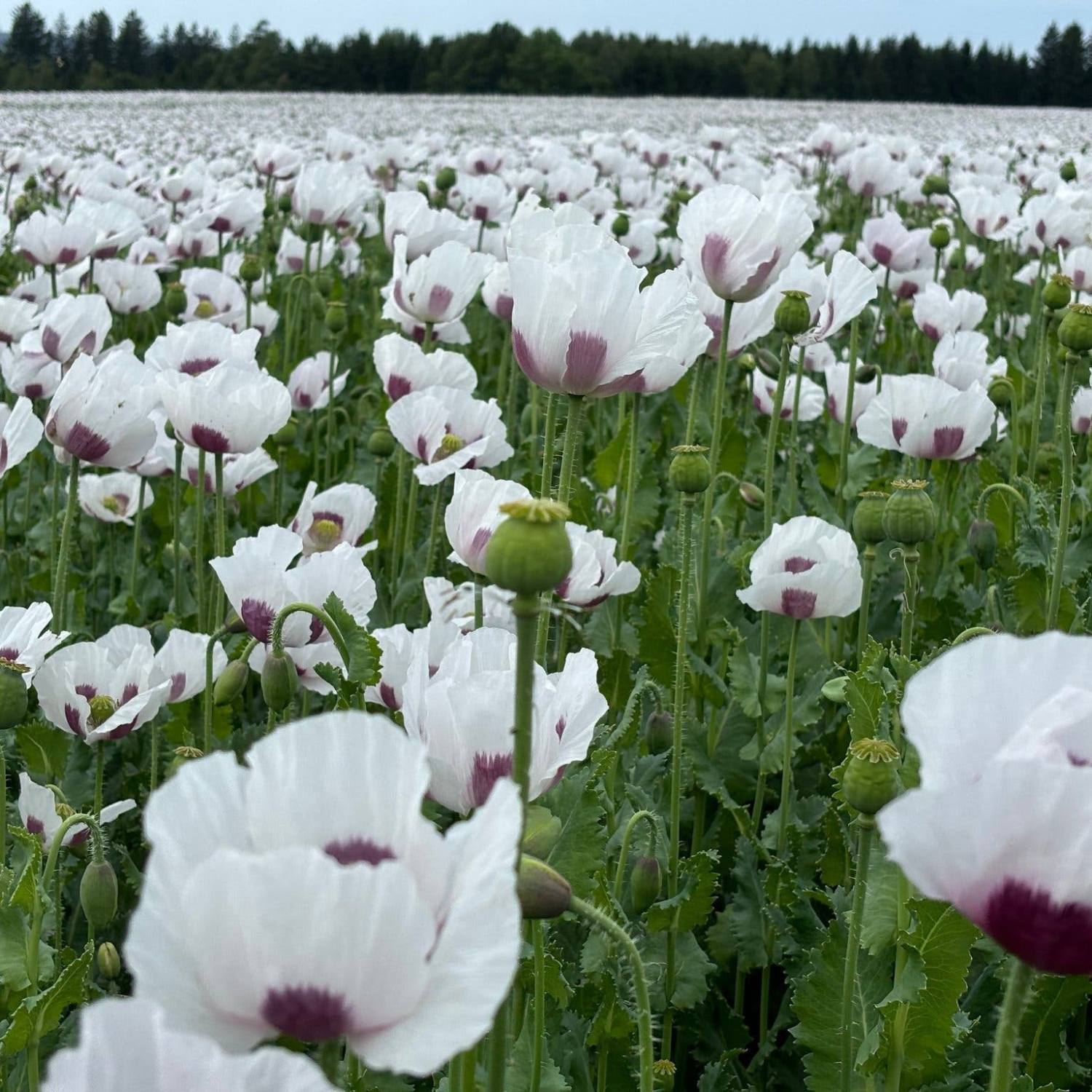
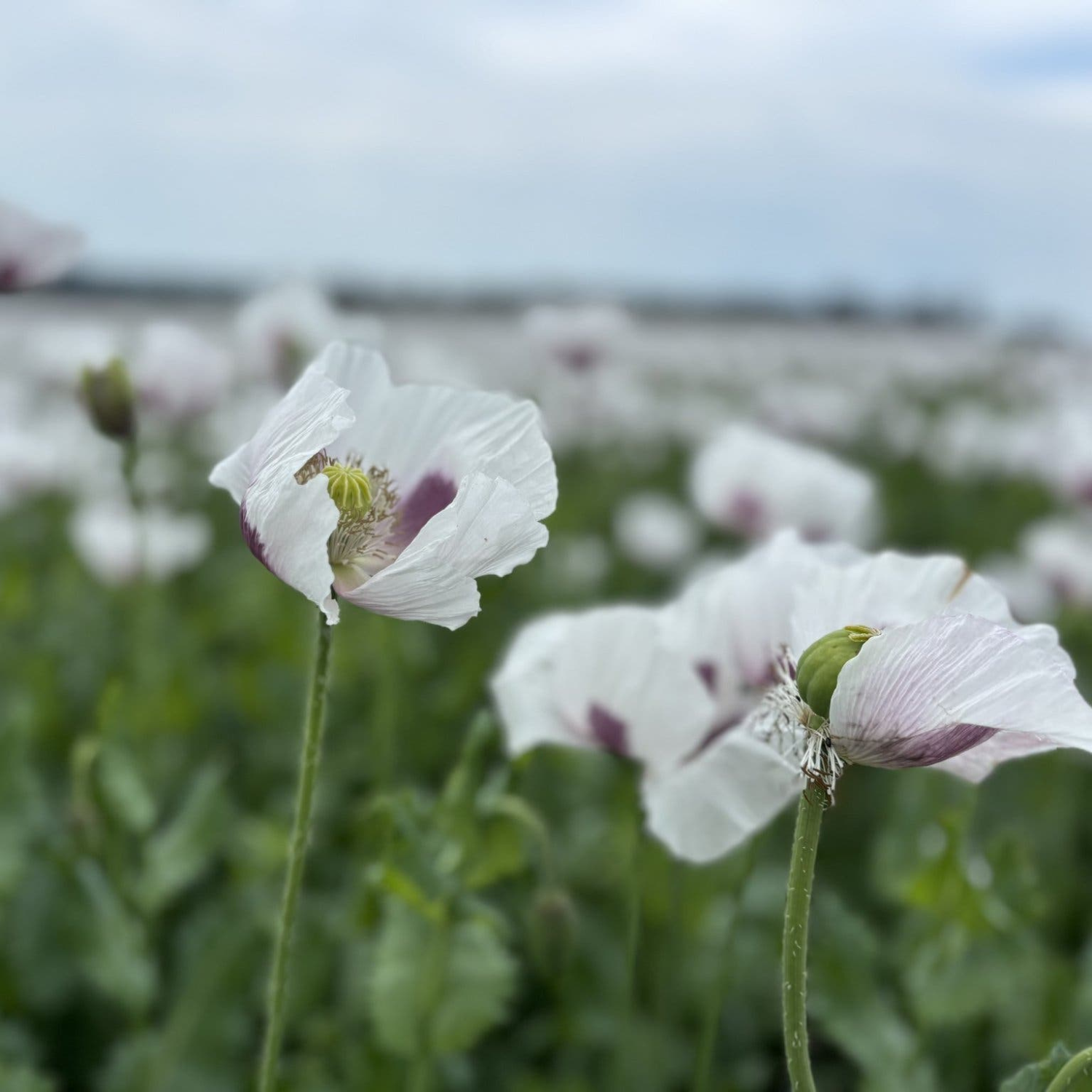
What sets the ‘Harlekyn’ apart is its spectacular “picotee” or bi-colored petals.
-
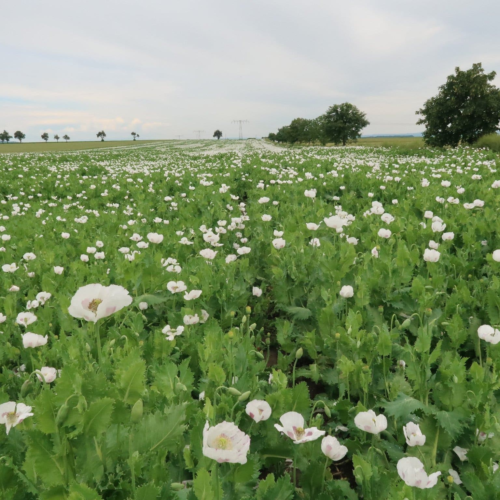
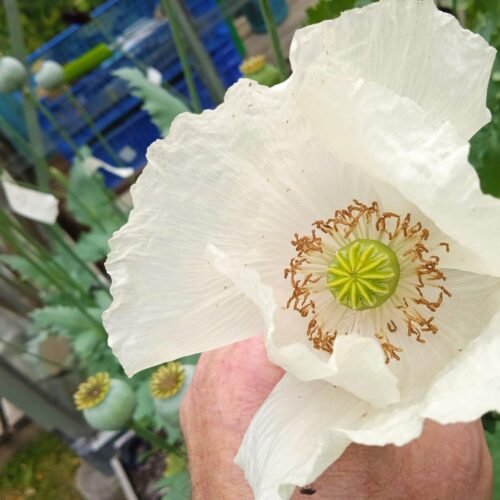
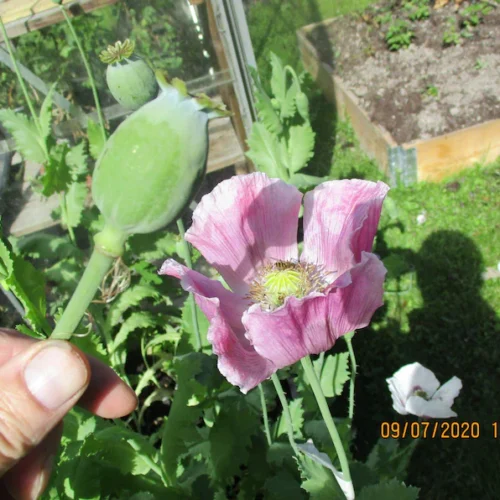
Base Color: The petals are a crisp, clean white to very pale pink.
- Contrast Markings: The base of each petal features a large, dramatic “blotch” or bleeding streak of deep violet, rich wine-red, or dark magenta-purple.
-
Shape: The edges of the petals are often slightly wavy, ruffled, or fringed, giving the flower a wild, elegant look reminiscent of a peony.
2. Growth Habits & Pods
-
Stems and Foliage: The plant develops sturdy, thick, glaucous (bluish-green/greyish-green) stems and deeply lobed leaves. This wax-like coating helps the plant retain moisture and gives the stalks the physical strength to hold up the heavy flowers and pods, even in windy conditions.
-
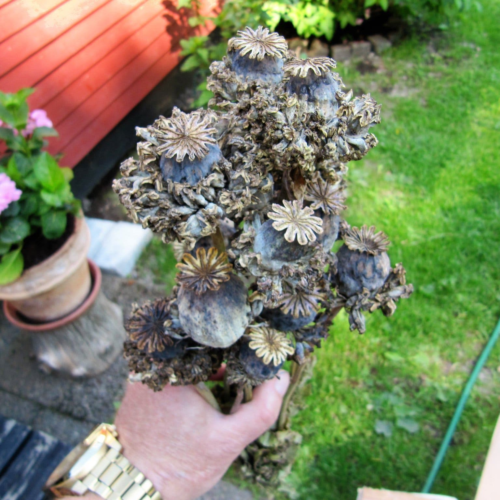
Seed Pods (Capsules): After the petals fall, MS Harlekyn produces large, highly symmetrical, barrel-shaped seed heads (capsules). These crown-topped pods are favored for dried floral arrangements because they dry evenly, retain a beautiful structural shape, and turn a lovely silvery-tan color.
3. Origin and the “MS” Prefix
The “MS” designation is common in Slovak and Czech agricultural breeding stations (such as the Research and Breeding Station at Malý Šariš in Slovakia, which specializes in breeding winter wheat and poppies).
Many of their registered varieties carry the “MS” prefix (e.g., MS Diamant, MS Januska, MS Luneta). These strains are specifically bred for:
-
High genetic stability: Ensuring the distinct two-toned harlequin pattern is consistently expressed generation after generation.
- Robust seed yield: Producing high-quality blue/slate seeds suitable for culinary baking or commercial oil production.
4. Cultivation Tips
- Sunlight: Full sun (at least 6 hours of direct sunlight daily).
- Soil: Prefers well-draining, moderately fertile soil. Poppies dislike “wet feet” (soggy roots), so sandy loam is ideal.
- Sowing: Direct sow the seeds in early spring (or late autumn in milder climates) as they do not transplant well due to a delicate taproot system. Barely cover the seeds with a very thin layer of soil or fine grit, as they need light to germinate.
- Watering: Keep the soil moist during germination and early growth. Once established, they are moderately drought-tolerant.
Reviews
There are no reviews yet.