
1. Botanical Profile & Unique Morphology
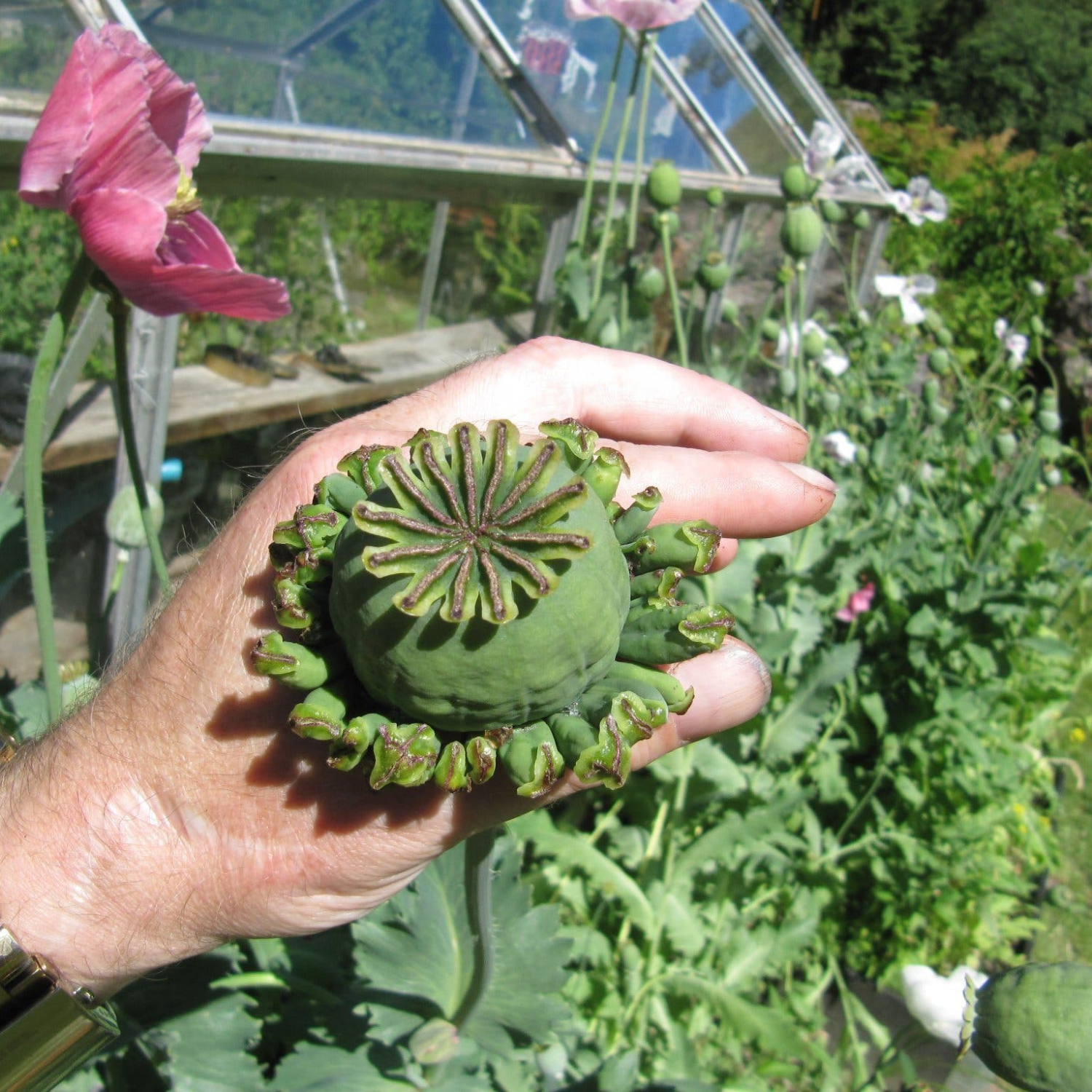
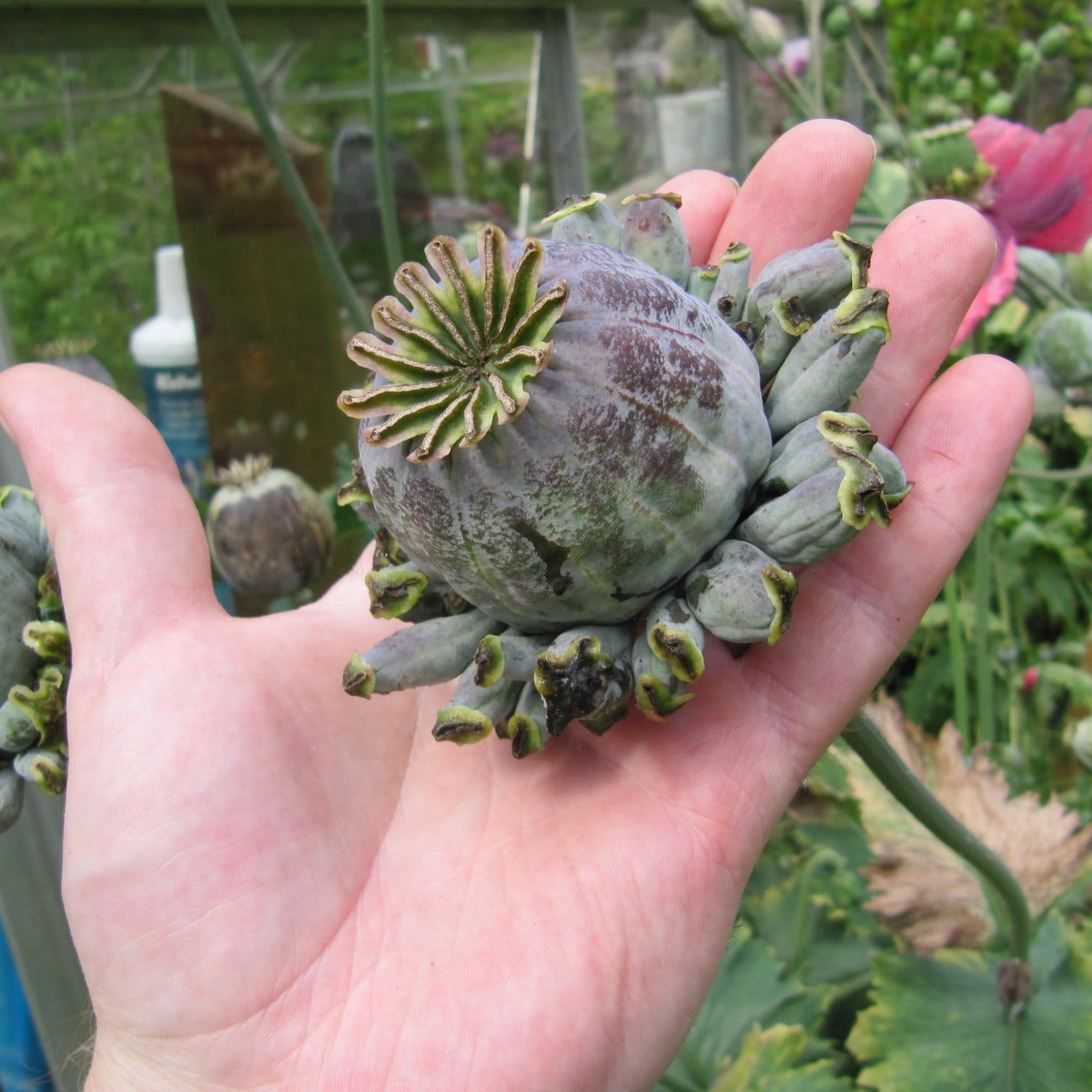
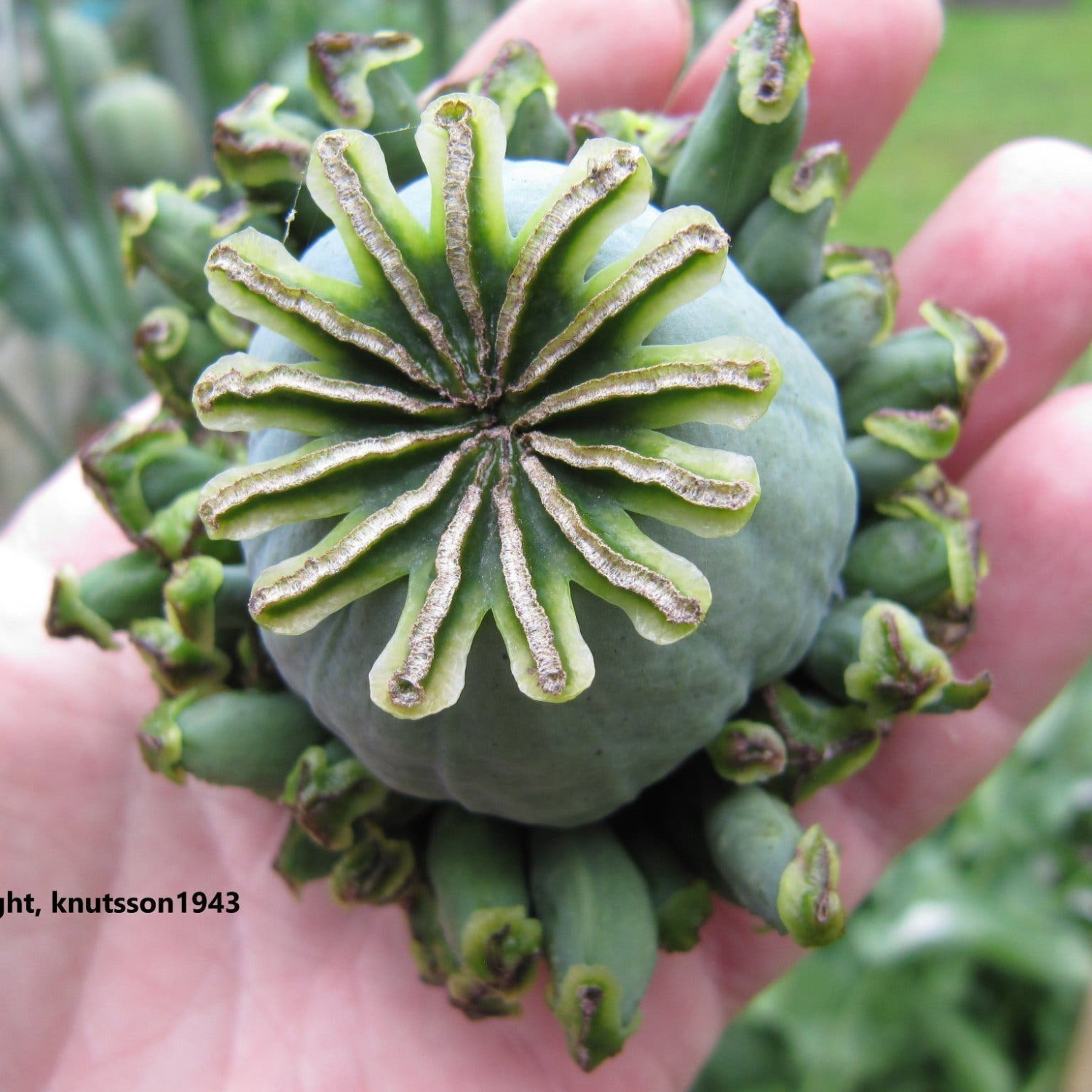
The name “Hen and Chicks” comes from its fascinating and highly unusual mutation, which is genetically stable.
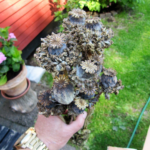
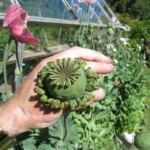
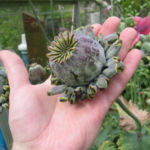
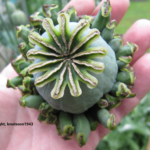
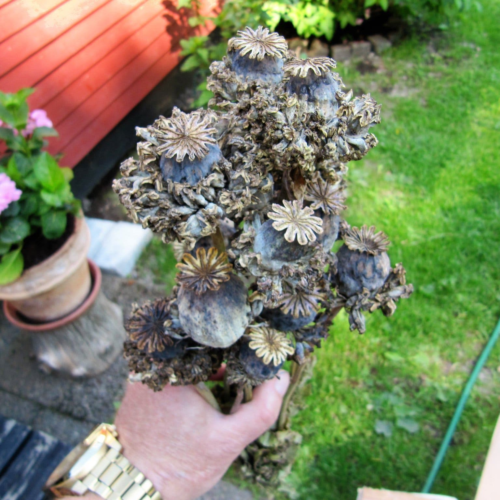
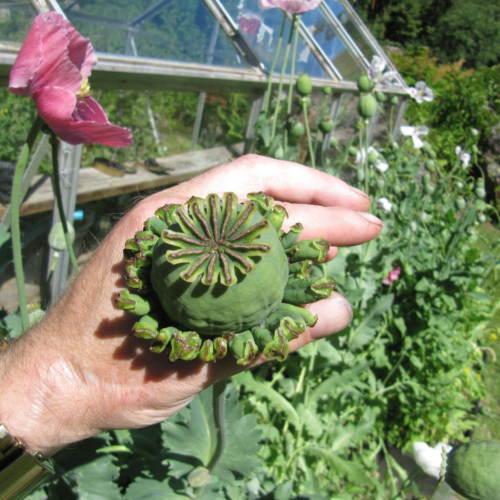
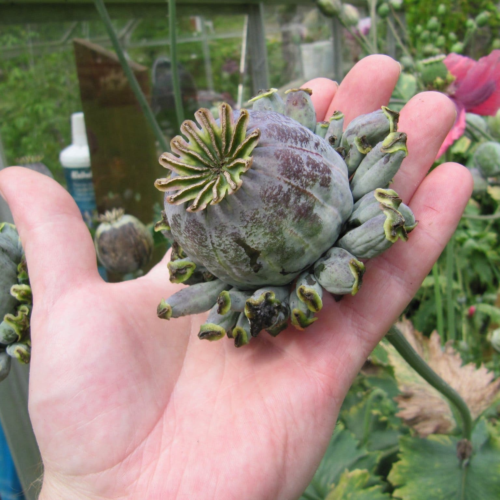
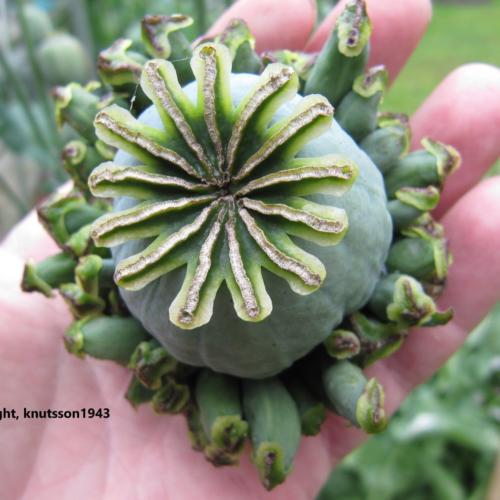
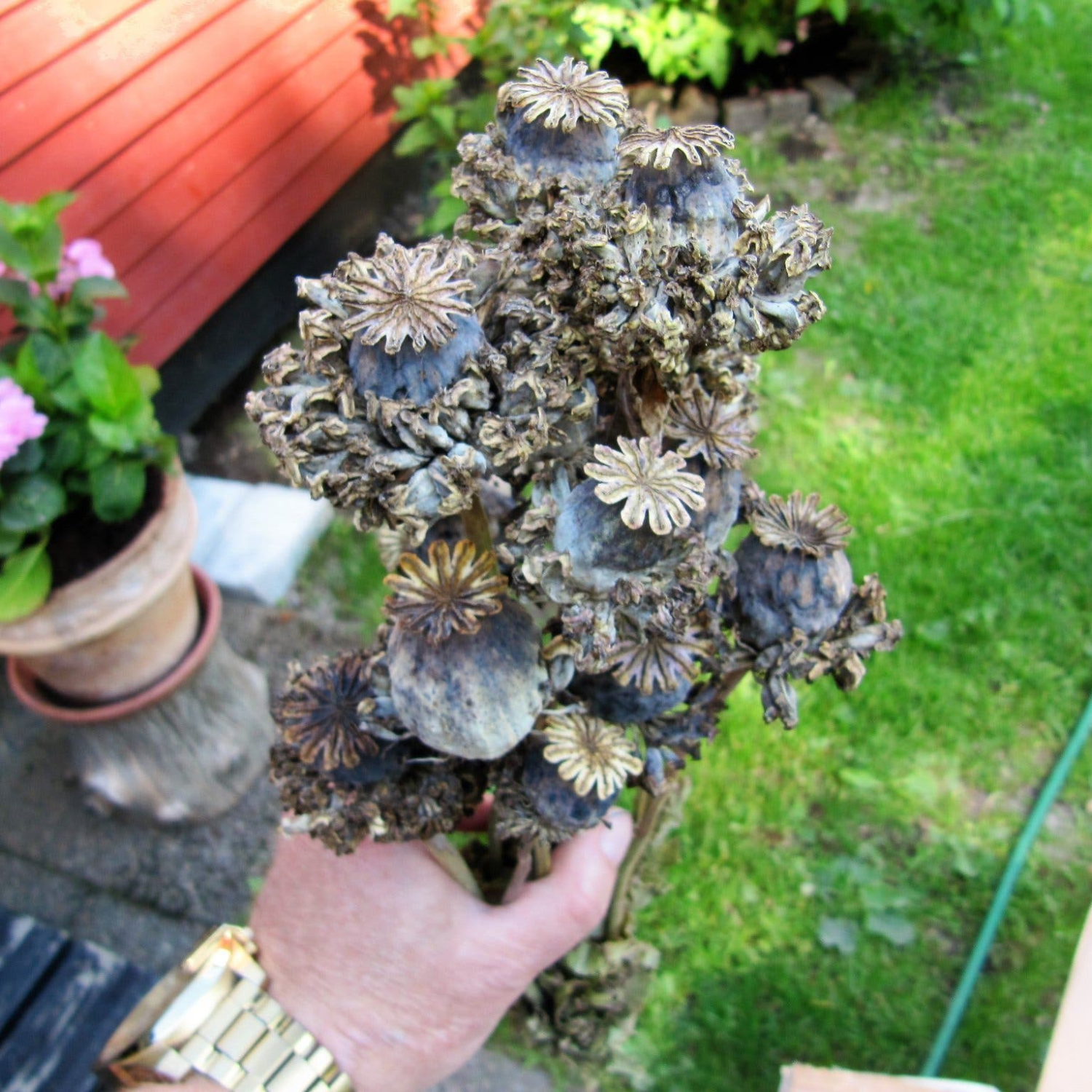
- The “Hen” (Main Pod): The plant produces a massive, central, barrel-shaped seed capsule at the top of the main stem.
- The “Chicks” (Satellite Pods): Clustered tightly around the base of the main crown are 5 to 20 smaller, secondary seed pods. These little pods “roost” around the mother pod, mimicking a hen with her chicks.
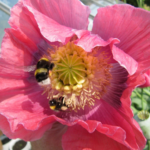
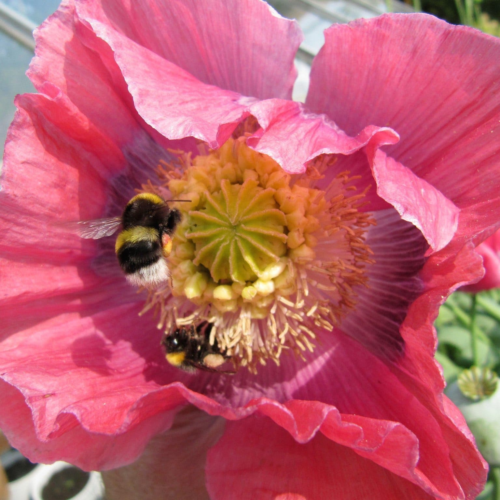
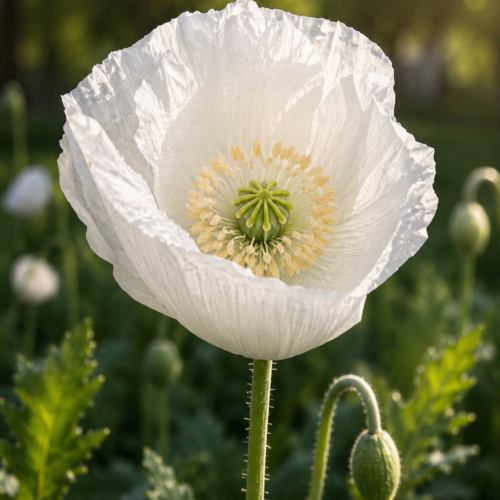
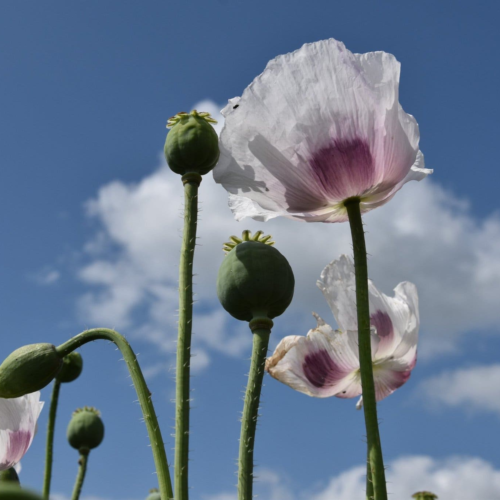
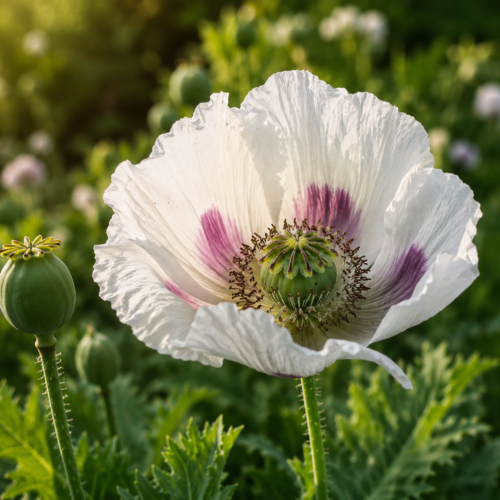
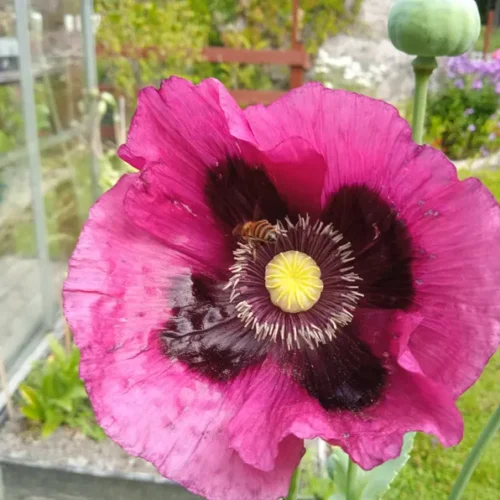
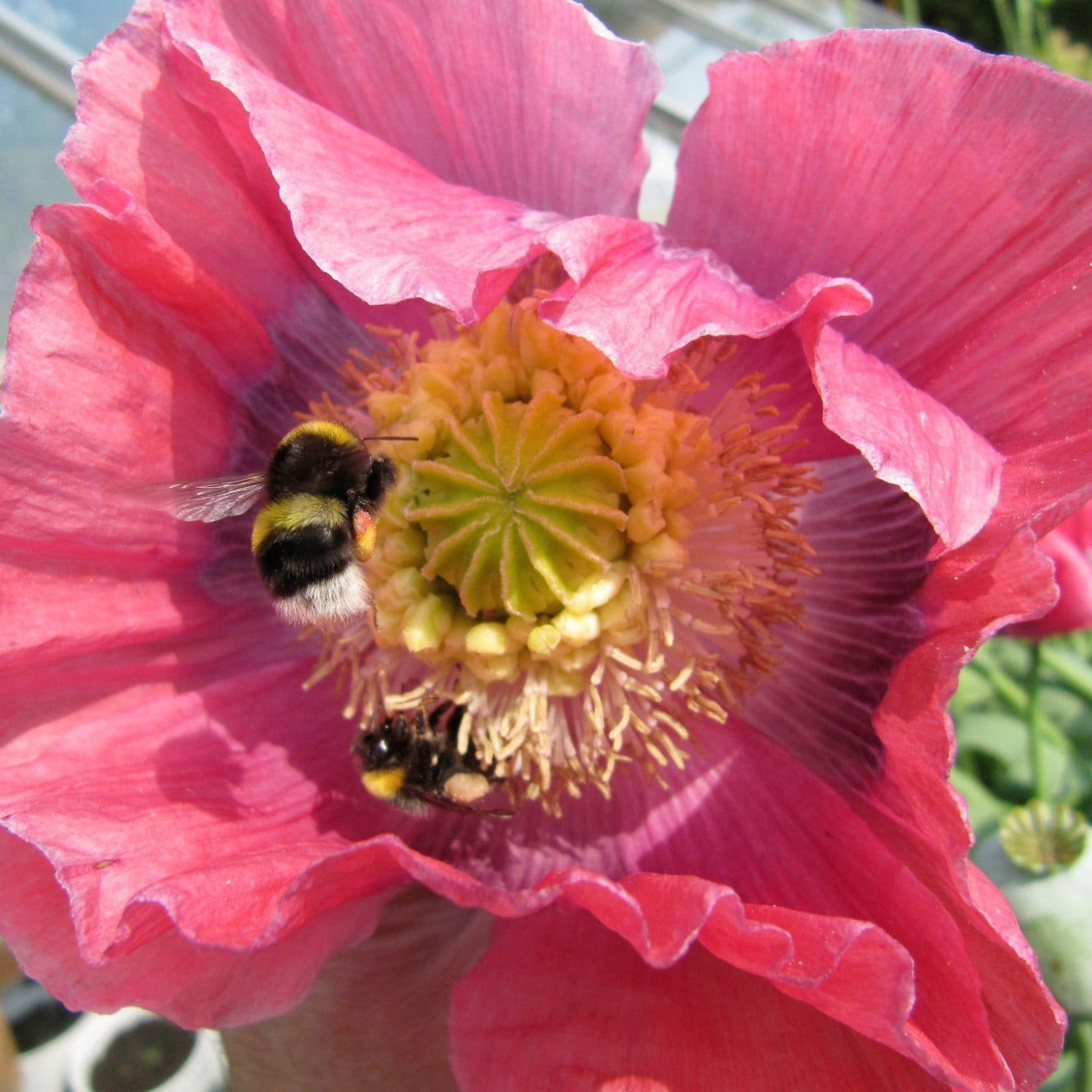
- The Flowers: Usually very large, single-petaled, and pale lavender, light pink, or white, with deep purple or magenta basal blotches near the stamen.
- Height: It is a robust, thick-stemmed plant, often reaching 100 to 120 cm (40 to 48 inches) in height to support the heavy weight of the cluster pods.
2. Chemical Profile (Alkaloid Content)
While modern European agricultural registers have bred “clean” or low-morphine variants of Hen and Chicks for mass seed production, the heirloom landrace version (originating from historical cultivation regions in the Middle East and Turkey) remains highly active.
- Morphine & Codeine Content: Unlike industrial culinary cultivars which are bred to contain less than 0.01% morphine in the dry pod mass, the traditional heirloom Hen and Chicks is a medicinal-grade strain. It produces a rich, thick latex that is naturally high in morphine, codeine, thebaine, and papaverine.
- The “Double-Edge” of Satellite Pods: Because the plant produces one massive central pod and dozens of smaller satellite pods per stem, the overall surface area of the latex-producing walls is much higher than a standard single-pod poppy. For breeders and extractors, this unique anatomy historically yielded a much higher volume of raw latex per plant.
3. Growing & Genetic Traits
Because it is a heavily mutated variety, growing the potent heirloom Hen and Chicks requires a bit of attention to keep the strain running strong:
- Heavy Feeders: Because it must produce up to 20 seed heads on a single stalk, this strain requires incredibly nutrient-rich, well-draining soil and plenty of root space. Under-fertilized or crowded plants will revert to producing only the main “Hen” pod, with the “Chicks” failing to develop.
- Watering: Like most high-alkaloid landraces, they prefer a dry, sunny climate during the late flowering and pod-browning stages. Heavy rain during the final weeks can wash away or degrade the alkaloid content on the outer walls of the pods.
- Genetic Stability: If you are growing this strain for its unique shape and chemical potency, it is highly recommended to isolate it from other Papaver somniferum varieties. Poppies cross-pollinate incredibly easily via wind and bees. If it crosses with a standard wild or low-morphine garden variety, the “Hen and Chicks” mutation and the alkaloid profile will be significantly diluted in the next generation.
Reviews
There are no reviews yet.