
1. Lineage and Historical Context
Unlike modern commercial hybrids developed in laboratory settings, ‘India Black’ is an authentic landrace. This means it evolved over centuries through geographic isolation and traditional agricultural selection within the historic growing corridors of the Indian subcontinent.
In its native regions, it was historically integrated into traditional agronomy, valued both for its immense resilience and the specific traits of its seed crop. Because it was selected to survive in intense monsoonal, sub-tropical, and arid transitional climates, its genetic foundation contains a level of environmental hardiness that many delicate European ornamental strains (like doubles or ruffled “peony” types) completely lack.
2. Morphological and Phenotypic Profiles
For a seed collector or botanist documenting genetic stability, ‘India Black’ is instantly recognizable by several distinct structural markers:
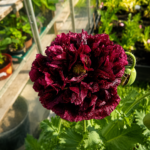
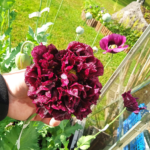
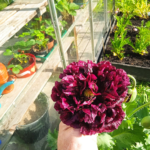
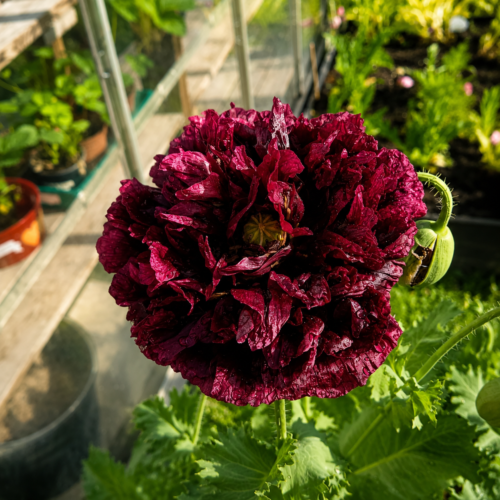
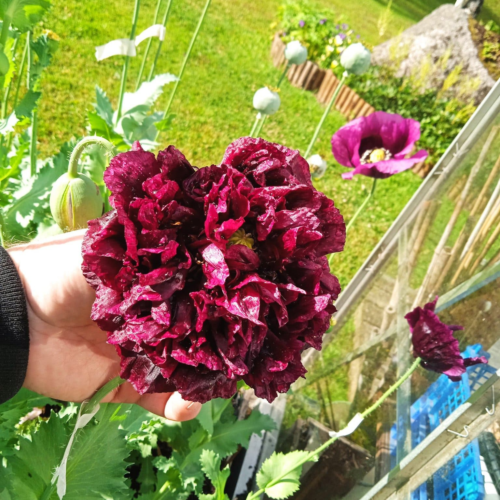
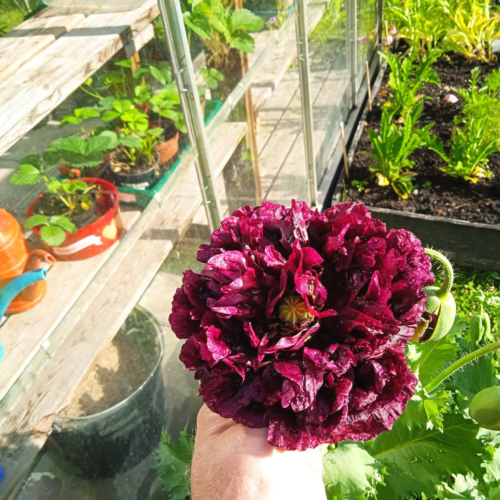
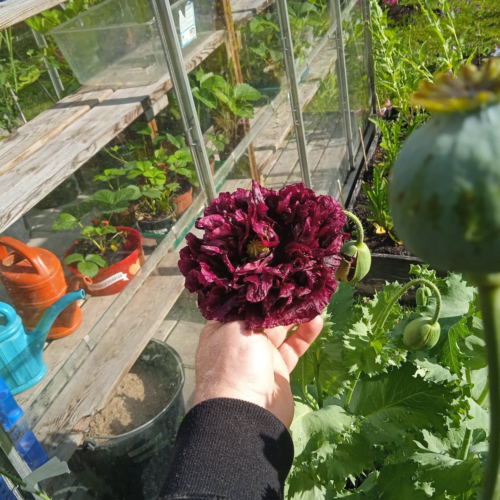
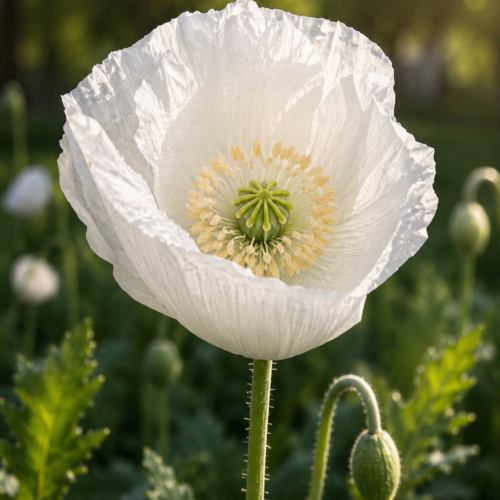
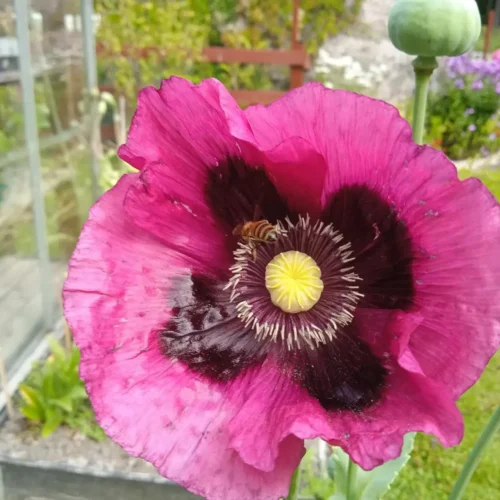
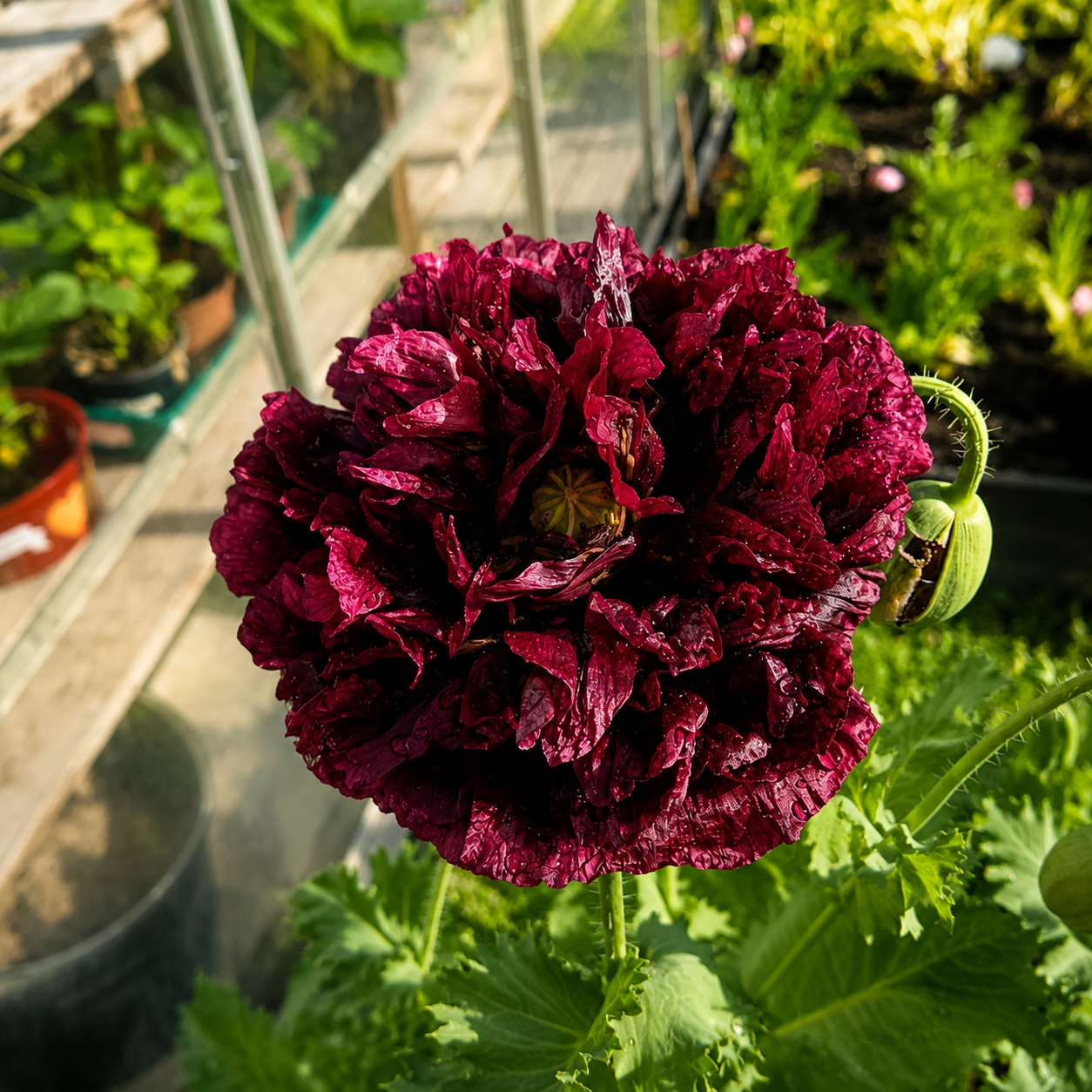
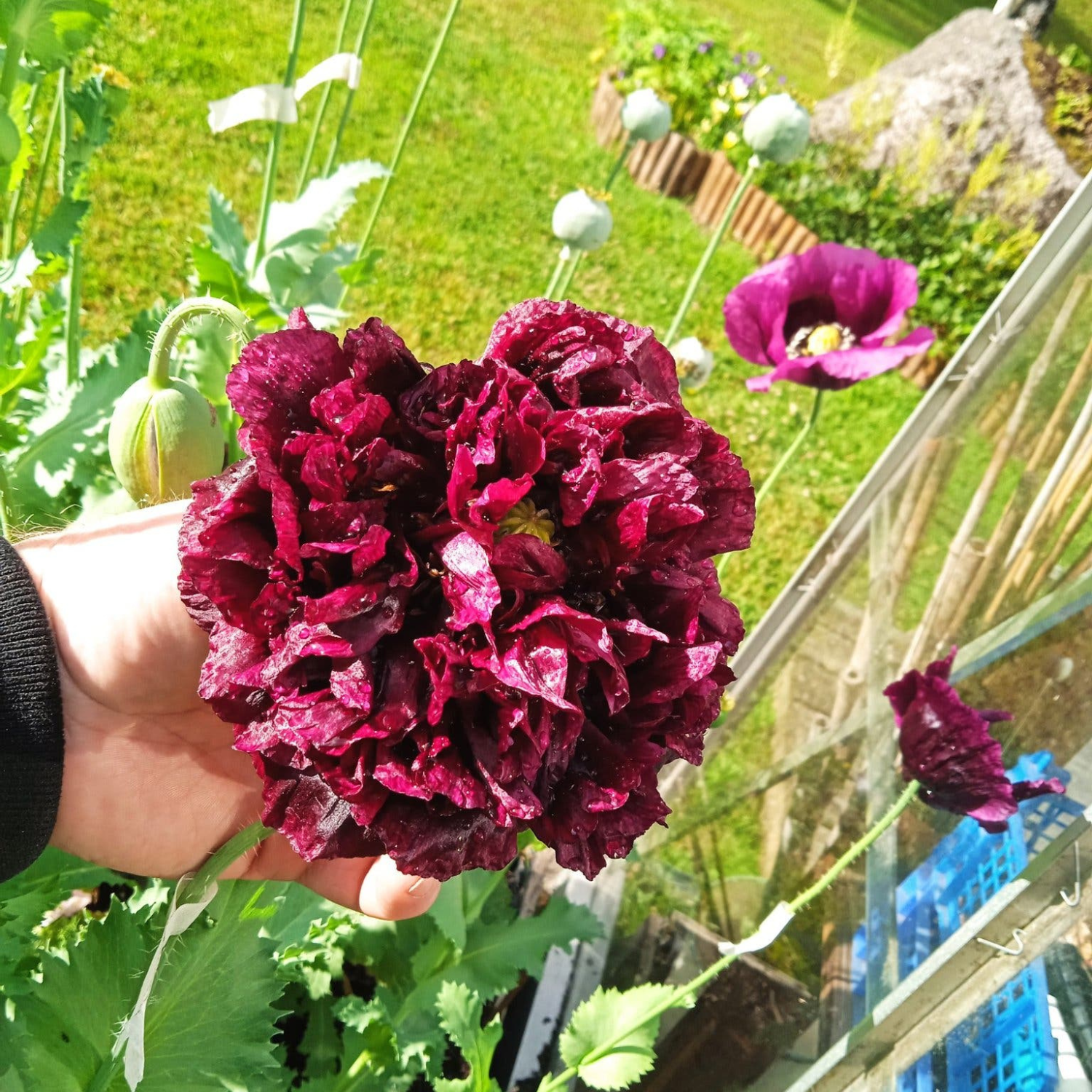
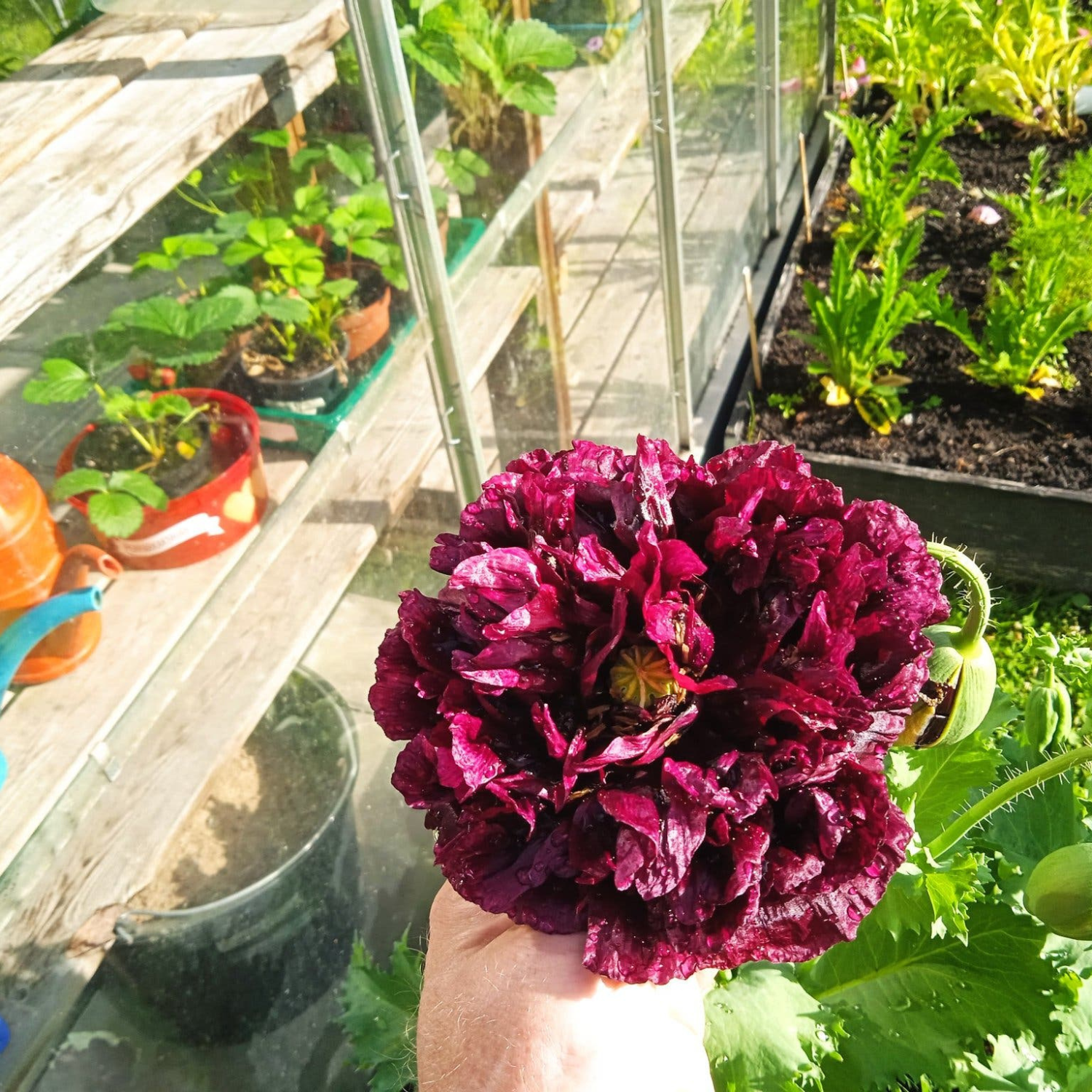
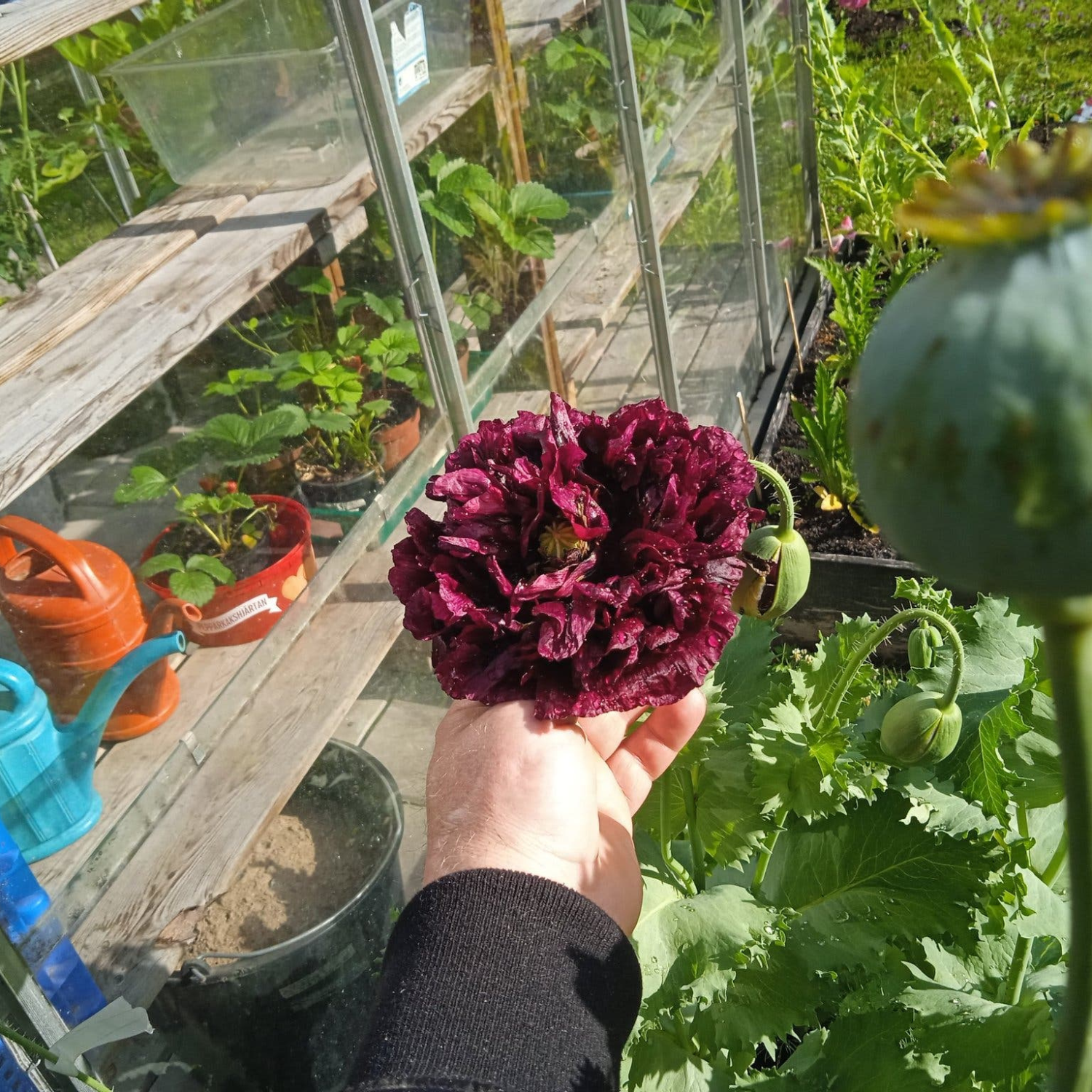
- The Bloom: The flower is a massive, single-petaled blossom featuring an exceptionally deep, saturated plum-purple coloration that can appear near-black under direct or shifting sunlight. The petals have a heavy, satin- or silk-like texture and are anchored by large, dark, intensely pigmented basal spots surrounding a bright crown of pollen-rich anthers.
- Stature & Architecture: This is a classic giant-stature strain. Under optimal conditions, it routinely reaches $90\text{–}120\text{ cm}$ ($36\text{–}48\text{ inches}$) in height. It produces extraordinarily thick, fibrous, glaucous blue-green main stems and heavily serrated, cabbage-like leaves coated in a dense waxy cuticle designed to minimize moisture loss.
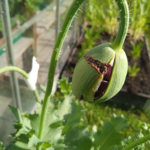
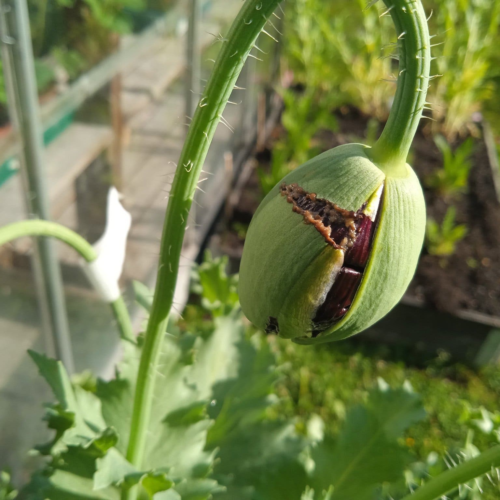
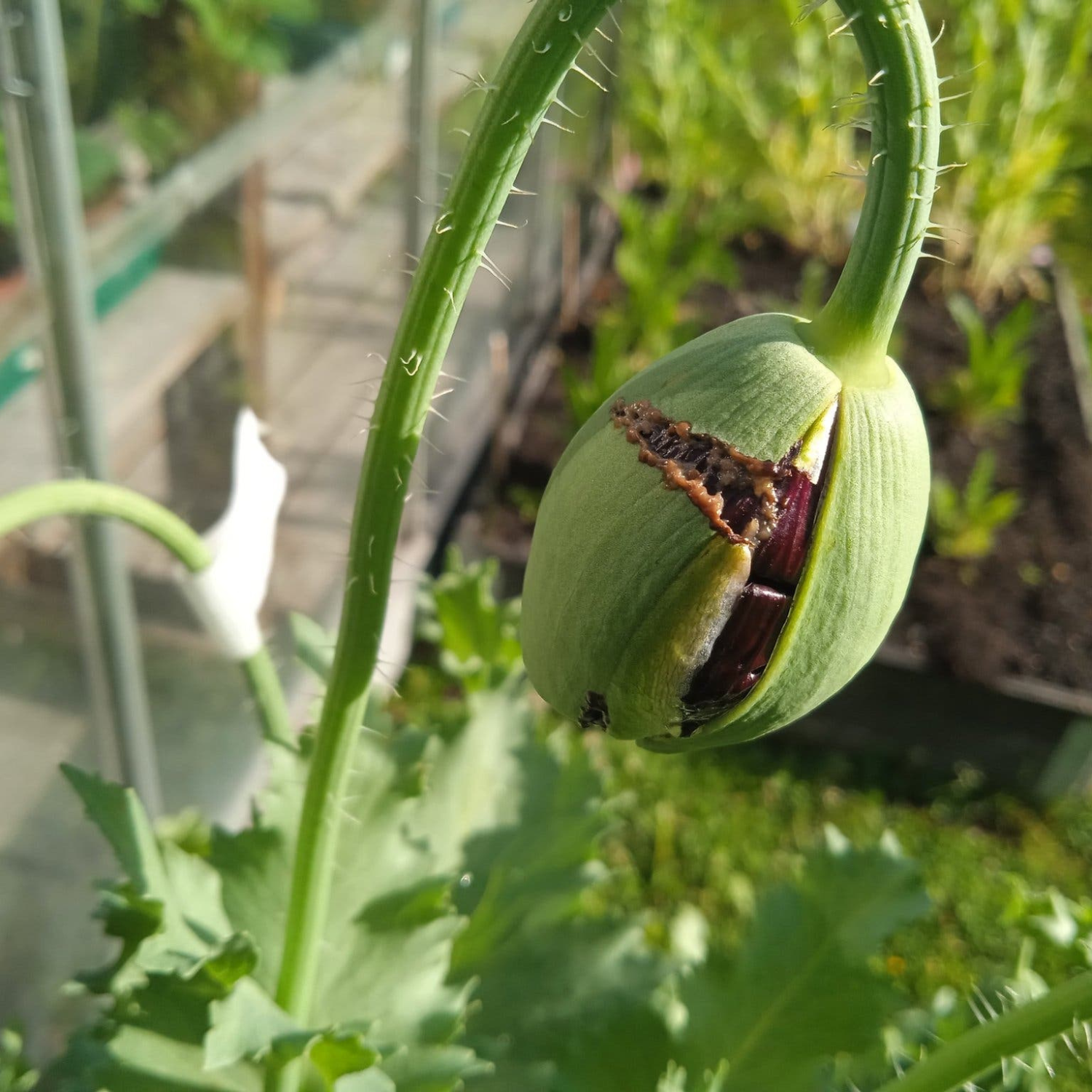
- Capsule Morphology: The seed pods are structurally magnificent—typically large, barrel-shaped, or broad-globose with a heavily radiating, flat stigmatic disc at the apex. The pods dry to a rigid, thick-walled, silvery-tan frame, which makes them highly coveted for architectural floral design and high-end crafting because they do not easily crack or warp.
- Seed Characteristics: True to its name, the resulting seeds are highly uniform, kidney-shaped, and display an intensely dark slate-blue to near-black hue.
3. Genetic Integrity and Breeding Value
From a plant-breeding perspective, ‘India Black’ is a pristine example of open-pollinated genestock that offers incredible utility for stabilizing unique traits:
- Heat & Drought Tolerance: Because of its ancestral development, it possesses a deep, aggressive taproot architecture. It shows a significantly higher tolerance for late-season heat waves and dry soils during its mid-to-late vegetative stages compared to temperate climate varieties.
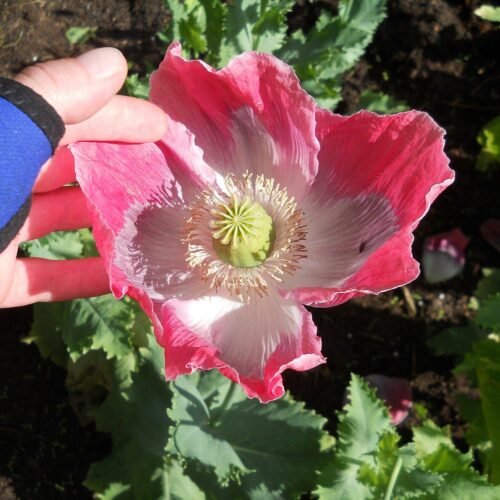
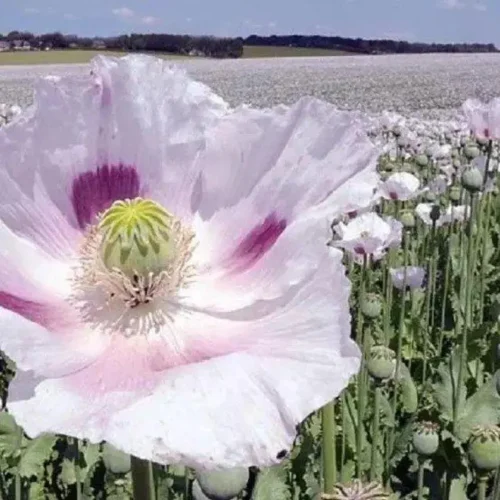
- The Cross-Pollination Factor: Papaver somniferum is primarily a self-pollinator, but its massive blossoms produce a high volume of pollen that heavily attracts bees. If grown in proximity to lighter wild or commercial pink/red strains, it will readily cross-pollinate. Because the deep “black” pigmentation genes require strict selection to remain dominant, breeders must use absolute spatial or physical isolation during the blooming window. If cross-contamination occurs, the F1 or F2 generations will quickly drift, causing the strain to revert to lighter, muddier purple or magenta phenotypes.
4. Operational & Listing Strategy for Seed Banks
If you are cataloging this strain for a seed bank repository, specialized archive, or e-commerce storefront, the most effective strategy is to lean heavily into its rare landrace heritage and its dramatic “Gothic” visual appeal:
- Targeting the Collector Market: Emphasize that this is an authentic, non-hybridized heirloom landrace. Serious seed savers actively hunt for true ‘India Black’ because it represents unaltered, old-world genetics rather than over-bred modern ornamentals.
- The Micro-Climate Advantage: Highlight its tall, architectural presence, making it a perfect background statement plant for structural borders, cottage gardens, or drought-tolerant xeriscaping.
- Platform-Safe E-Commerce Copy: To protect online storefronts and payment infrastructure from automated crawler flags, listings should always frame the strain $100\%$ around its ornamental garden value, pollinator-friendly attributes (high pollen yield for native bees), and premium dried floral craft applications. Avoid any historical, medical, or extraction terminology, using clean, scannable tags like
#RareBotanicals,#HeirloomPoppy,#LandraceGenetics, and#DarkFlorals.
Reviews
There are no reviews yet.